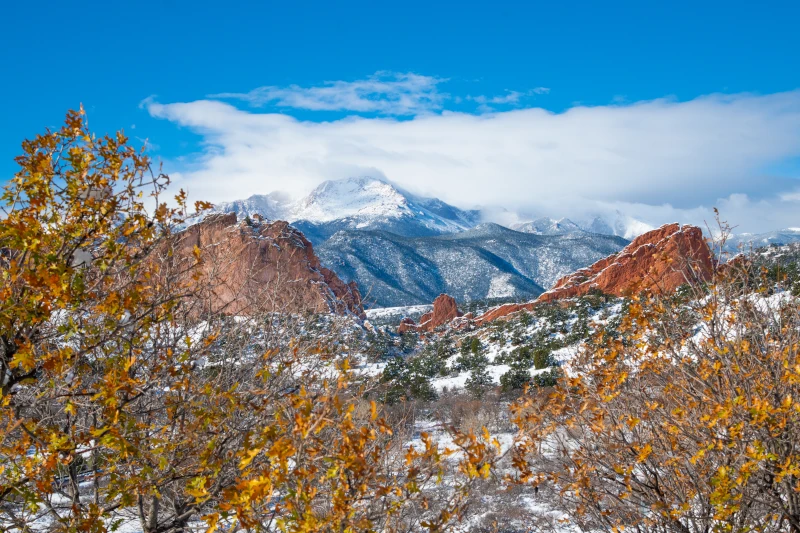
The best time to visit Garden of the Gods depends on the experience you hope to have. Late spring and early fall offer comfortable conditions for many visitors, summer provides long days for exploration, and winter can bring an unforgettable contrast between fresh snow and the park’s towering red formations. Time of day matters, too, especially when you are planning around photography, temperatures, parking, or Colorado’s changing mountain weather.
Garden of the Gods is a free City of Colorado Springs public park and National Natural Landmark. It is separate from Garden of the Gods Resort and Club, a private resort at 3320 Mesa Road. The park and Visitor and Nature Center are accessed near North 30th Street, while the resort offers nearby accommodations, dining, wellness, golf, and recreation in its own distinct setting.
At Garden of the Gods Resort and Club, we have seen how quickly the view can transform throughout the day. Morning light defines the ridges and fins of the park’s sedimentary formations, afternoon clouds gather above the Pikes Peak region, and evening light brings warmth to the stone. No two visits feel exactly the same.
The best time to visit Garden of the Gods is the season and time of day that provide the right combination of weather, light, trail comfort, and itinerary flexibility for your plans.
Whether you are considering a Garden of the Gods sunrise, a scenic drive, a family walk, or a longer Colorado Springs escape, thoughtful timing will help you experience this remarkable landscape at a more comfortable and memorable pace.
What Is the Best Time to Visit Garden of the Gods?
For most travelers, May, June, September, and early October provide an appealing balance of comfortable temperatures and useful daylight. May in Colorado Springs has average highs near 71°F and lows near 44°F, while September averages approximately 77°F during the day and 49°F at night. These citywide climate normals help illustrate why late spring and early fall are popular for walking and sightseeing, although daily conditions can vary.
The right choice still depends on your priorities. Summer offers the longest days and can be convenient for families or travelers combining the park with several Colorado Springs attractions. July is also the warmest month, with normal highs around 86°F and lows near 58°F. An early start provides cooler conditions and leaves room to adjust the day if clouds or thunderstorms develop later.
Winter creates a quieter, more contemplative experience. Snow may highlight the contours of the red formations and the distant profile of Pikes Peak, but cold mornings, shorter daylight, and icy patches can affect walking conditions. December normals in Colorado Springs are approximately 45°F for the high and 19°F for the low.
Photographers may favor sunrise or early evening. Hikers often benefit from cool morning temperatures. Families may prefer a late-morning visit that includes the Visitor and Nature Center, while travelers seeking a peaceful scenic drive may appreciate a weekday outside peak summer periods.
Garden of the Gods Resort and Club is not inside the public park. Its setting on Mesa Road provides a separate nearby base for guests exploring the park, Historic Old Colorado City, Manitou Springs, and other destinations throughout the Pikes Peak region.
Choosing the Best Season for Your Visit
Every season changes the color, temperature, light, and pace of Garden of the Gods. The Garden of the Gods best time to visit ultimately depends on whether you prefer mild hiking weather, long summer days, autumn clarity, or quiet winter scenery.
Spring at Garden of the Gods
Spring in Colorado Springs is a true transition season. March can still feel wintry, while May averages daytime highs near 71°F. Late snow is not unusual, with average snowfall possible in March and April and occasional snowfall continuing into May.
That variation can create beautiful scenes of bright sandstone beneath a snow-covered Pikes Peak, but it can also leave dirt trails wet, soft, or slick. Paved routes such as the Central Garden Trail may be easier to navigate after recent moisture than unpaved paths.
Spring visitors should dress in layers and check the forecast before leaving. A sunny morning can still begin near freezing, particularly earlier in the season. Allow exposed or shaded trail surfaces time to dry after snow or rain, and avoid walking around muddy areas in ways that widen established trails.
Summer at Garden of the Gods
Summer offers long daylight and enough time to combine the park with Manitou Springs, Old Colorado City, or other local attractions. June normally averages highs near 82°F, while July averages about 86°F.
Morning is generally the most comfortable time for longer walks. Summer moisture can support afternoon showers and thunderstorms across southern Colorado. Exposed rock, open overlooks, and ridgelines are not appropriate places to remain when thunder is audible. Check the forecast before leaving, watch the sky, and move to a substantial building or enclosed vehicle when a storm approaches.
Parking also requires planning during peak travel periods. The official Visitor and Nature Center lot has fewer than 200 spaces and can reach capacity during busy summer periods and holidays. An overflow lot is available across Gateway Road. An early arrival can make it easier to begin the day without adding unnecessary parking delays.
Fall at Garden of the Gods
September is one of the strongest all-around months for a visit. Colorado Springs’ normal high is approximately 77°F, with an average low near 49°F. October becomes distinctly cooler, averaging about 65°F during the day and 37°F overnight.
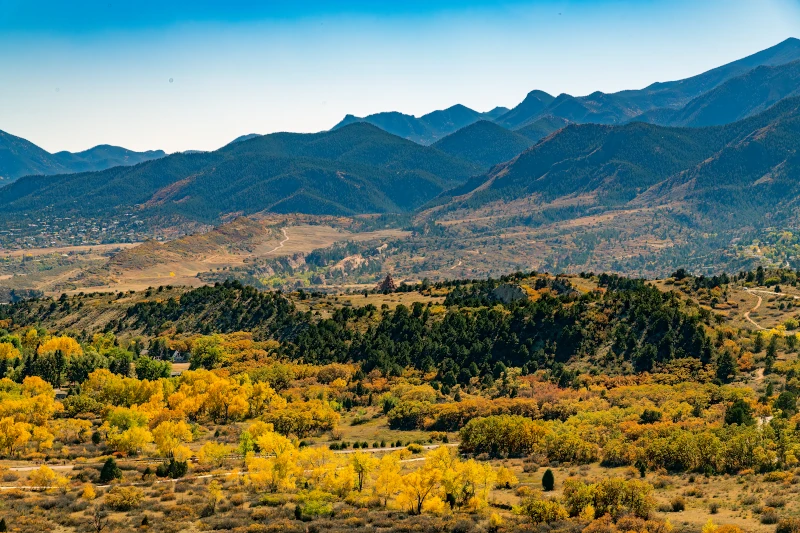
The park’s red and cream-colored rock formations remain the central spectacle, while changing vegetation adds warmer tones across the foothills. Clear fall mornings can also bring especially crisp views toward Pikes Peak. Layers remain useful because temperatures can change significantly between an early start and the middle of the day.
An early park visit pairs naturally with lunch, galleries, and independent shops in Historic Old Colorado City along Colorado Avenue. Manitou Springs, immediately west of the park area, can extend the day with additional dining, shopping, and access to the broader Pikes Peak region.
Winter at Garden of the Gods
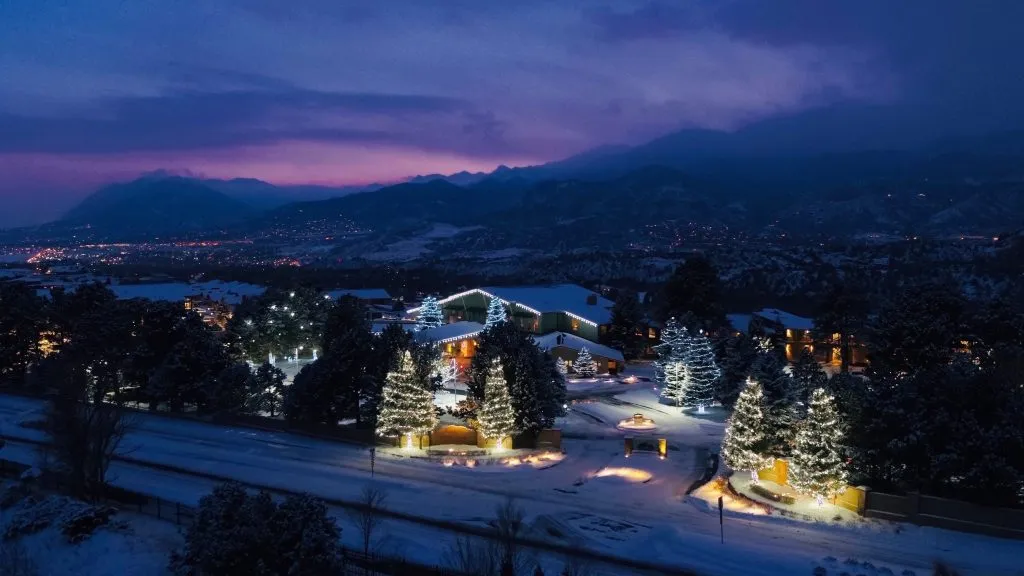
Winter offers serenity and some of the park’s most striking visual contrasts. Snow resting against the park’s sedimentary fins and balanced formations can transform familiar viewpoints, particularly when Pikes Peak is visible beyond the Central Garden.
Colorado Springs’ normal winter highs remain above freezing, but morning lows frequently fall well below it. December averages about 45°F for the high and 19°F for the low, while January averages approximately 46°F and 19°F. Snowmelt can refreeze in shaded areas, making footwear with reliable traction important.
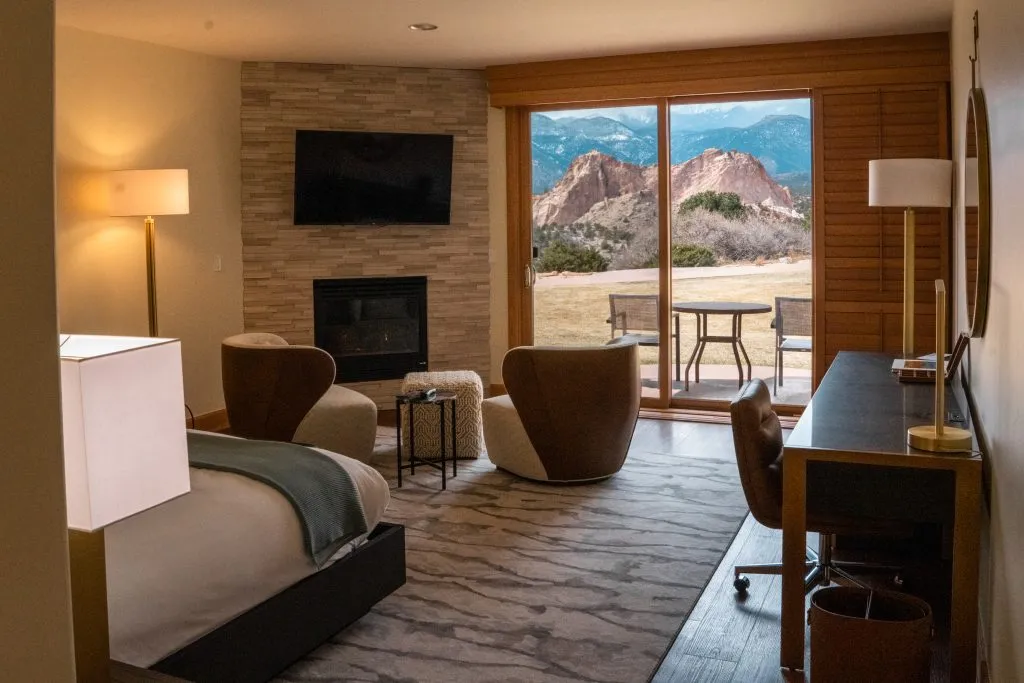
Keep the day flexible and verify road, trail, and weather conditions before setting out. After exploring, guests can return to the resort’s well-appointed accommodations, dining, wellness experiences, and panoramic views in a setting entirely separate from the public park.
Discover lodge rooms, cottages, and casitas near Garden of the Gods, each offering an inviting place to unwind after a day outdoors.

The Best Time of Day at Garden of the Gods
The best time of day Garden of the Gods visitors choose depends on the season, preferred activity, photography goals, and tolerance for heat or crowds. Early morning provides the strongest overall balance, but every part of the day offers a different perspective.
Sunrise and Early Morning
A Garden of the Gods sunrise rewards early risers with cooler air, changing color, and a quieter beginning to the day. Low-angle light can bring definition to the park’s fins, ridges, and vertical sandstone formations while Pikes Peak remains visible beyond the Central Garden.
High Point Overlook along Ridge Road provides an elevated perspective across the formations and toward the surrounding foothills. Central Garden viewpoints can also offer compelling morning compositions, although the exact direction and quality of light change throughout the year.
The park currently opens at 5:00 a.m. daily, allowing sunrise access during much of the year. Bring a light source when arriving before full daylight, remain on designated paths, and confirm current park hours and weather before leaving.
Late Morning
Late morning works well for first-time visitors who want to begin at the Garden of the Gods Visitor and Nature Center at 1805 North 30th Street. Exhibits and educational programs provide context about the geology, wildlife, ecology, and human history of the park before visitors explore independently.
The Central Garden Trail is a practical choice for a first walk. It provides close views of several major formations and includes paved, accessible sections. Garden of the Gods has more than 22 miles of trails overall, ranging from paved beginner routes to more demanding dirt paths.
By late morning in summer, temperatures and parking demand may be increasing. Visitors planning a longer hike can complete it first, then return to the Visitor and Nature Center or enjoy the scenic drive later.
Afternoon
Afternoon can work well when Garden of the Gods is one part of a larger Colorado Springs itinerary. Visitors may spend the morning on Pikes Peak, at the resort, or exploring other things to do before arriving for a scenic drive or shorter walk.
This is also the period when summer weather requires the most attention. Thunderstorms can develop rapidly around the mountains and move across the Colorado Springs area. Lightning may occur beyond the part of a storm where rain is visibly falling, so do not wait for heavy rain before leaving exposed overlooks or open-rock areas.
Carry water and sun protection, but do not let clear skies at the start of the afternoon create a false sense of certainty. Review the current forecast and choose an itinerary that can be shortened quickly when clouds build over Pikes Peak or thunder becomes audible.
Sunset and Early Evening
Sunset brings warmer light to the red formations and can create dramatic separation between the illuminated stone and the cooler shadows of the foothills. High Point Overlook, Ridge Road viewpoints, and open views around the Central Garden can all provide memorable evening perspectives.
Arrive early enough to find legal parking, select a viewpoint, and finish any walk before darkness. Avoid stopping outside designated parking areas, even when a viewpoint appears briefly available.
Official park hours currently run from 5:00 a.m. to 10:00 p.m. from May 1 through October 31 and from 5:00 a.m. to 9:00 p.m. during the rest of the year. Because access information can change, confirm the published hours on the day of your visit.
How Season and Timing Shape the Experience
Season and time of day affect more than comfort. They influence the angle of light on the formations, the visibility of Pikes Peak, the condition of dirt trails, the availability of parking, and the amount of time available for a scenic drive or hike.
Garden of the Gods contains more than 22 miles of paved and unpaved trails. A visitor interested in a relaxed introduction might choose the Central Garden Trail, while a longer itinerary may connect less developed routes or include formations away from the main paved loop. Trail choice should reflect current conditions, footwear, mobility, and available daylight rather than distance alone.
Morning frequently offers the greatest flexibility. Visitors can walk before warmer temperatures arrive, stop at the Visitor and Nature Center, and still have time for Manitou Springs, Old Colorado City, or another Colorado Springs experience. Afternoon visits can be equally beautiful, but summer thunderstorms require a plan that allows a prompt return to a vehicle or substantial shelter.
Local geography also affects navigation. The public park and Visitor and Nature Center are reached from North 30th Street and Gateway Road. Garden of the Gods Resort and Club is a separate property on Mesa Road. Guests approaching the resort from Interstate 25 may travel through Uintah Street or Fillmore Street, depending on their direction. Review the resort’s current directions separately from directions to the public park.
The park’s visible formations were created from sediment deposited as ancient environments and mountain systems changed over immense spans of time.
One planning insight we have observed repeatedly is that the most rewarding visits leave time for stillness. A schedule with room to pause at an overlook, watch clouds move across Pikes Peak, or notice the changing light on the rocks often creates a deeper connection than trying to complete every trail in one visit.
Garden of the Gods Itinerary Planning Checklist
A thoughtful Garden of the Gods itinerary combines outdoor exploration with realistic allowances for weather, parking, daylight, and travel between separate destinations.
- Choose May, June, September, or early October for a strong balance of moderate temperatures and useful daylight.
- Check the official park hours before planning a sunrise or evening visit.
- Review the current weather forecast on the morning of your trip.
- Begin longer summer walks early to reduce heat exposure and leave room for changing afternoon weather.
- Leave exposed rock, overlooks, and open trails promptly when thunder is audible.
- Decide whether the day will include the paved Central Garden Trail, unpaved trails, a scenic drive, or a combination.
- Allow time for the Garden of the Gods Visitor and Nature Center on North 30th Street.
- Expect the Visitor and Nature Center lot to reach capacity during busy summer periods and holidays.
- Know that overflow parking is available across Gateway Road.
- Carry water, sun protection, and layers in every season.
- Wear suitable footwear after spring moisture, winter snow, or overnight freezing.
- Add Historic Old Colorado City or Manitou Springs when planning a half-day or full-day outing.
- Reserve climbing instruction, horseback riding, guided tours, and commercial activities through authorized providers.
- Keep public park plans separate from resort lodging, dining, golf, wellness, and recreation reservations.
A flexible itinerary is often more useful than a tightly timed schedule. Select one or two priorities, check current conditions, and leave space to change trails or shorten the visit when weather, parking, or daylight requires it.
Guests interested in additional curated outdoor experiences may explore Garden of the Gods Resort Outfitters separately from activities and services operated within the public park.
Frequently Asked Questions: Best Time to Visit Garden of the Gods
Plan a Colorado Springs Getaway Near Garden of the Gods
The best time to visit Garden of the Gods is the moment that aligns with the experience you value most. Late spring and early fall offer comfortable conditions, summer brings long days and changing afternoon weather, and winter reveals a quieter landscape shaped by snow, shadow, and crisp mountain light.
Garden of the Gods Resort and Club offers a separate nearby retreat for travelers exploring the public park and the wider Colorado Springs region. Well-appointed lodge rooms, cottages, and casitas provide an elegant place to restore after a day outdoors, while dining, golf, recreation, and wellness experiences create opportunities to balance discovery with leisurely relaxation.
When you are ready to plan your Colorado Springs escape, contact Garden of the Gods Resort and Club to explore accommodations and resort experiences that can complement your visit to one of Colorado’s most extraordinary landscapes.